
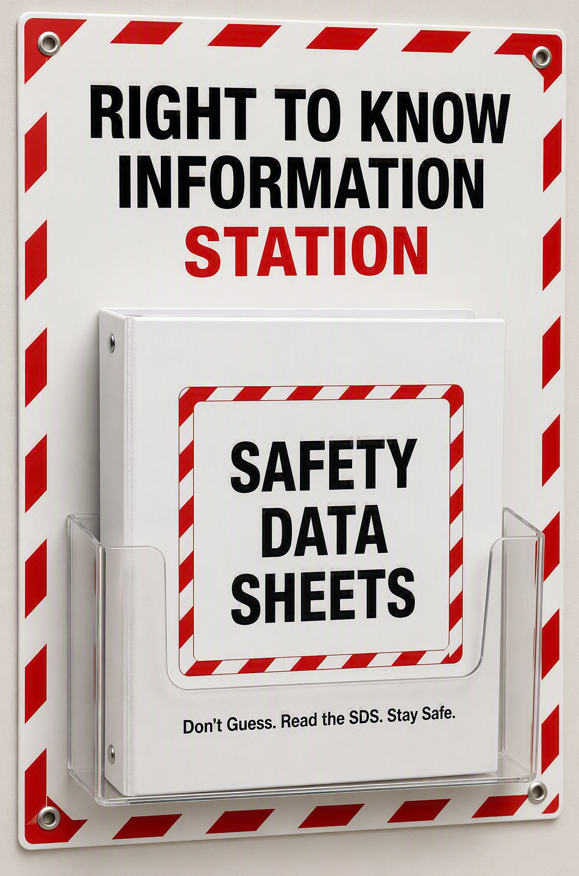
Don't Guess. Read the SDS. Stay Safe.
Before using any chemical, ask yourself one question: Do I know exactly what this product can do to me and how to protect myself? The answer can usually be found in the chemical's Safety Data Sheet (aka SDS).
When working with any chemical, it is important to understand both the short-term and long-term hazards associated with its use. The first source of information is typically the product label, which provides a quick overview of the chemical's hazards and required precautions. While labels are a great starting point, they often contain limited information. For more detailed guidance, employees should refer to the Safety Data Sheet.
The label tells you what the hazard is. The SDS tells you how to work safely with it.
An SDS is a standardized 16-section document that provides comprehensive information about a hazardous chemical, including its hazards, handling requirements, storage conditions, personal protective equipment, emergency procedures, and health effects. The Safety Data Sheet is one of the most valuable tools available for helping workers understand how to safely use chemicals in the workplace.
Why Read the SDS?
A Safety Data Sheet does much more than satisfy a regulatory requirement. It provides critical information that can help you:
Select the correct personal protective equipment.
Prevent exposure to hazardous chemicals.
Understand safe handling and storage requirements.
Respond appropriately to spills or accidental releases.
Administer proper first aid if exposure occurs.
Recognize potential short-term and long-term health effects.
Taking a few minutes to review the Safety Data Sheet before using a chemical can help prevent injuries today and reduce the risk of health problems later in life.
Five SDS Sections You Should Review
While all 16 sections contain valuable information, these are among the most useful for employees who work directly with chemicals:
Section 2: Hazard Identification - Provides information about the chemical's physical and health hazards, warning statements, and precautionary measures.
Section 4: First-Aid Measures - Explains what actions to take if the chemical is inhaled, swallowed, or comes into contact with the skin or eyes.
Section 7: Handling and Storage - Describes how to safely use and store the chemical to minimize exposure and prevent incidents.
Section 8: Exposure Controls/Personal Protection - Identifies exposure limits and the PPE needed to safely work with the chemical.
Section 11: Toxicological Information - Explains potential health effects from exposure, including both immediate symptoms and possible long-term impacts.
The SDS Provides Details Labels Cannot
For example, a product label may indicate that a solvent is flammable. However, the SDS may also explain that repeated exposure can affect the nervous system, identify the specific type of gloves required for protection, and provide instructions for responding to a spill or accidental exposure. This additional information allows you to make informed decisions and take the proper precautions before work begins.
Take a Minute, Protect Yourself for a Lifetime
Chemical safety should never involve guesswork. Before using a new chemical, take a few minutes to review its Safety Data Sheet. Understanding the hazards, required protective measures, emergency procedures, and potential health effects can help prevent injuries, illnesses, and costly incidents.
When it comes to chemical safety, the facts are in the SDS. Read it. Understand it. Use it. Stay safe.
To learn more about regulatory requirements, check out the OSHA Brief Hazard Communication Standard: Safety Data Sheets. Call ACS to schedule your next Hazard Communication training.