Build a Strong Safety Program: Prevent Injuries, Reduce Costs, and Strengthen Compliance
A workplace safety program helps protect employees from injuries and illnesses, reduce operating costs, and support compliance with state and federal requirements. A safety committee can strengthen these efforts by identifying hazards and addressing minor incidents before they lead to serious accidents. Some states also offer incentive programs that may reduce workers’ compensation insurance premiums.
Key Benefits of a Strong Safety Program
Injury and Illness Prevention: Proactive safety management identifies and corrects workplace hazards before they cause harm, helping reduce injuries and illnesses.
Cost Reduction: Lowers direct and indirect expenses, including workers' compensation premiums, equipment damage, legal fees, and costs from replacing injured workers.
Regulatory Compliance: Prevents costly fines, penalties, and shutdowns by maintaining adherence to OSHA and other legal standards.
Increased Productivity & Morale: Builds employee trust, lowers absenteeism, and creates a focused environment where workers feel valued and safe.
Enhanced Reputation: Demonstrates strong social responsibility and a clear duty of care to clients, regulators, and the community.
Core Elements of an Effective Program
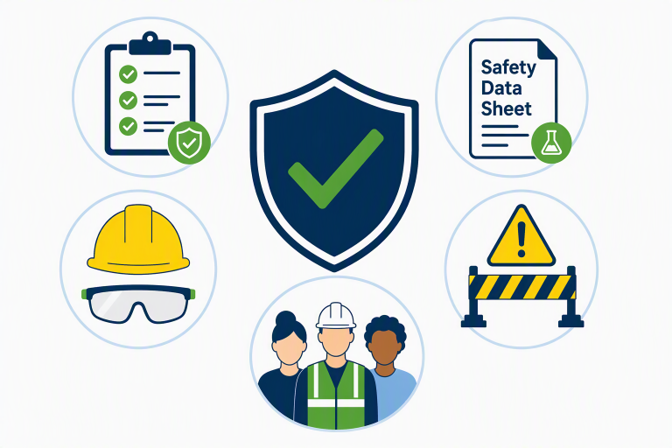
Management Leadership: Leaders set clear safety goals, assign responsibilities, and provide necessary resources.
Worker Participation: Employees actively help spot hazards, report near-misses, and develop safer work routines.
Hazard Identification and Assessment: Regular inspections and risk assessments identify workplace hazards and evaluate both the severity and likelihood of potential harm.
Hazard Prevention and Control: After hazards are identified and assessed, appropriate controls are implemented, including engineering controls, administrative measures, and personal protective equipment (PPE).
Education and Training: Employees receive clear instruction on safety rules, procedures, and the proper use of personal protective equipment (PPE) in a language and vocabulary they understand.
Program Evaluation and Improvement: Employers review incident trends and program performance, update procedures, and apply industry best practices to strengthen results and support continuous improvement.
Communication & Coordination for Host Employers, Contractors, and Staffing Agencies: Host employers, contractors and staffing agencies must commit to providing the same level of safety and health protection to all employees, and coordinate before work starts to resolve any conflicts that could negatively affect safety and health
These elements work together to create a culture of safety in the workplace, ensuring that employees are well-informed of potential hazards and protocols. For tools and resources to help you implement these recommended practices, review OSHA’s Recommended Practices for Safety and Health Programs and contact ACS to learn how our safety and compliance solutions can support your workplace safety goals.