
Housekeeping: The First Line of Defense Against Slips, Trips, and Falls
Slips, trips, and falls are among the most common workplace injuries across industries. Many workplace incidents occur not because of complex safety failures, but because of everyday hazards such as spills, cluttered walkways, loose materials, or poorly maintained floors. Whether in an office, warehouse, manufacturing facility, or retail environment, these incidents can result in sprains, fractures, lost productivity, and increased workers' compensation costs. The good news? Many slip, trip, and fall hazards can be eliminated through effective housekeeping practices.
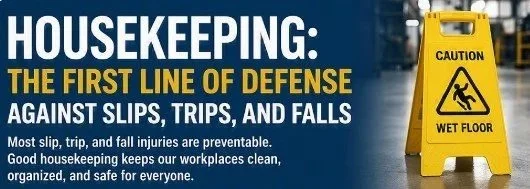
When it comes to preventing slips, trips, and falls, housekeeping is the first and most effective line of defense. Housekeeping is the foundation of preventing workplace injuries and goes far beyond simply sweeping the floors. It requires keeping floors free of slip and trip hazards, maintaining clear emergency exits and walkways, and ensuring proper storage and disposal of materials. A tidy facility lowers the risk of fires and hazardous material exposure.
Good housekeeping is also a key component of OSHA's Walking-Working Surfaces Standard (29 CFR 1910.22), which requires employers to keep workplaces clean, orderly, sanitary, and free of hazards that could contribute to slips, trips, and falls.
Key requirements include:
Keep work areas clean and orderly: Employers must ensure that all workplaces, passageways, storerooms, service rooms, and walking-working surfaces are maintained in a clean, orderly, and sanitary condition.
Maintain clean and dry floors: Floors should be kept clean and, where feasible, dry. In areas where wet processes are used, employers must provide adequate drainage and, when possible, dry standing surfaces such as mats, platforms, or false floors.
Eliminate surface hazards: Walking-working surfaces must be kept free of hazards such as spills, leaks, snow, ice, corrosion, loose boards, and protruding objects that could cause slips, trips, or falls.
Provide safe access and egress: Employees must have safe means of accessing and exiting walking-working surfaces.
Conduct regular inspections: Employers are required to inspect walking-working surfaces regularly and maintain them in a safe condition.
Correct hazards promptly: Unsafe conditions must be repaired or corrected before employees use the area again. If immediate correction is not possible, the hazard must be guarded to prevent employee exposure.
Good housekeeping isn't just about cleanliness. It's about safety. Every spill cleaned, aisle cleared, and hazard removed helps protect employees from preventable injuries. It’s is a continuous habit that requires the participation of everyone on the floor—not just the janitorial staff. When housekeeping becomes part of everyday operations, employees are better able to move safely throughout the workplace and focus on their tasks without unnecessary risks.
By prioritizing housekeeping and following OSHA's walking-working surfaces requirements, organizations can reduce hazards, prevent injuries, improve compliance, and create a safer environment for everyone.
Call ACS and find out about safety Housekeeping practices or to schedule a training today.