
The Importance of Proactive Safety Documentation
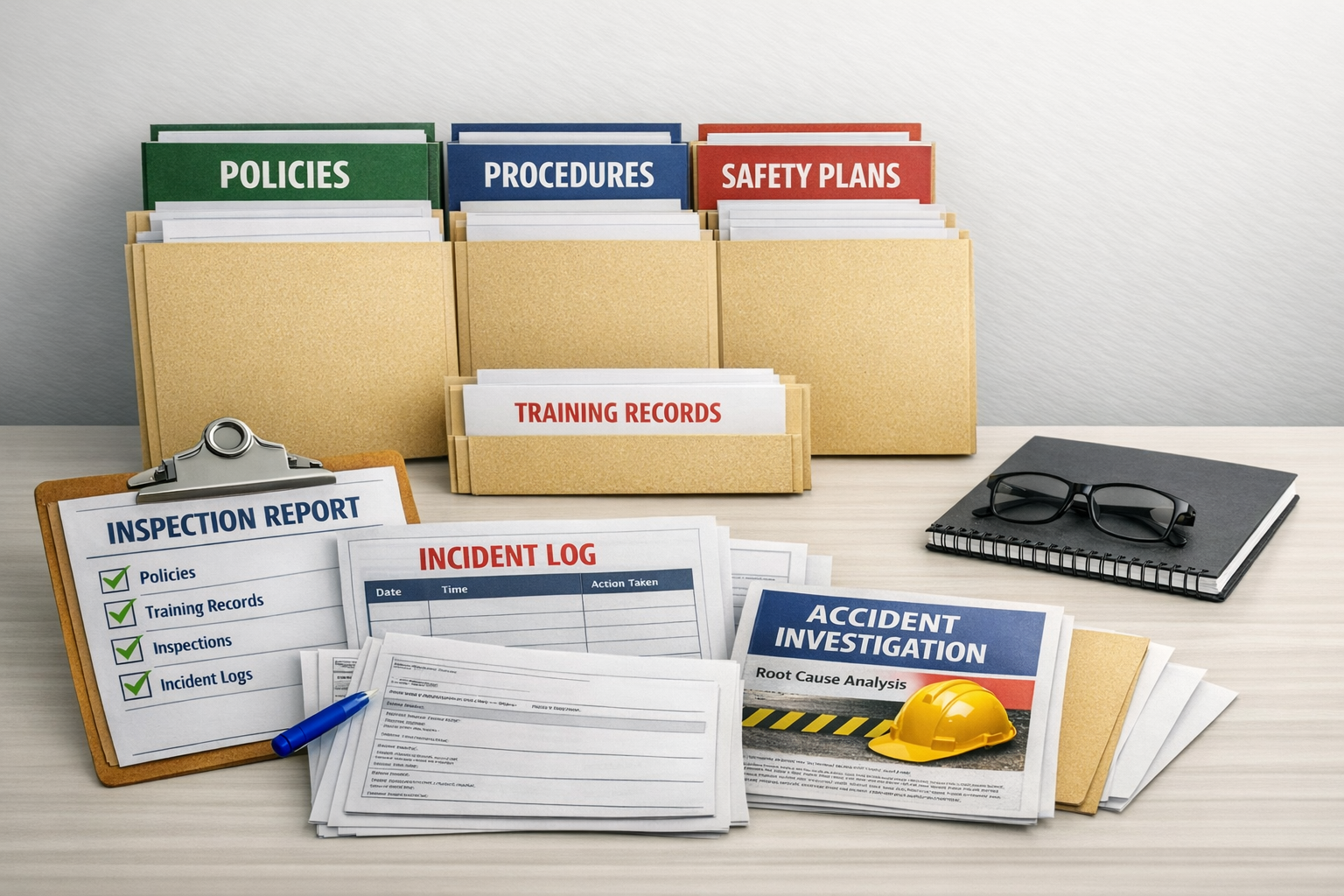
Workplace safety documentation is a critical part of your company’s safety culture. It plays a key role in preventing accidents, protecting workers, ensuring regulatory compliance, and maintaining operational continuity. Timely, accurate, and proactive safety documentation demonstrates that your workplace meets required safety standards. It includes policies, procedures, plans/programs as well as training records, inspection reports, incident logs, and accident investigations, providing a clear record of the measures taken to protect employees.
Accurate records become especially valuable when something goes wrong. After an incident, documentation helps reconstruct the sequence of events, compare what should have happened with what actually occurred, and determine whether the issue stemmed from human error, equipment failure, or a gap in the safety program. This level of clarity makes it possible to assign responsibility appropriately and address the root cause, so the problem doesn’t repeat.
Incomplete, outdated, or reactive safety documentation can lead to:
Increased risk of injuries or fatalities
Regulatory non-compliance and penalties
Ineffective hazard controls
Delayed incident response and corrective actions
Being proactive helps your company identify risks before incidents occur and ensures everyone has access to the information needed to work safely.
All employees and contractors are expected to actively participate in the following:
1. Maintain Up‑to‑Date Safety Documents
Job Safety Analyses (JSAs) / Job Hazard Analyses (JHAs)
Safe Work Practices (SWPs) / Standard Operating Procedures (SOPs)
Risk Assessments
Emergency Response Plans
It is essential to review documents regularly and update them whenever work conditions, equipment, or processes change.
2. Document Hazards and Near Misses Immediately
Report hazards, unsafe conditions, and near misses as soon as they are identified
Ensure reports are clear, factual, and complete
By reporting small incidents, the possibility of accidents will hopefully diminish. Early documentation enables corrective action before an injury or incident occurs.
3. Use Documentation to Drive Prevention
Reference safety documents during pre‑task briefings and toolbox talks
Apply documented controls in daily work activities
Documentation is only effective when actively used—not just stored.
4. Supervisor and Management Responsibilities
Ensure required safety documentation is in place before work begins
Verify employees understand and follow documented procedures
Close out corrective actions and document completions
Proactive leadership prevents reactive incident management.
5. Continuous Improvement
Encourage employee feedback on safety documents
Update documentation based on lessons learned, audits, and incident trends
Treat safety documentation as a living system, not a one‑time task.
Proactive safety documentation saves lives. If it’s not documented, it can’t protect you. Safety documentation works only when everyone participates.
If you have questions about safety documentation, do not hesitate to contact ACS today at clientservices@acs-safety.com.