
Facial Hair and Respirator Use: It’s All About the Seal!
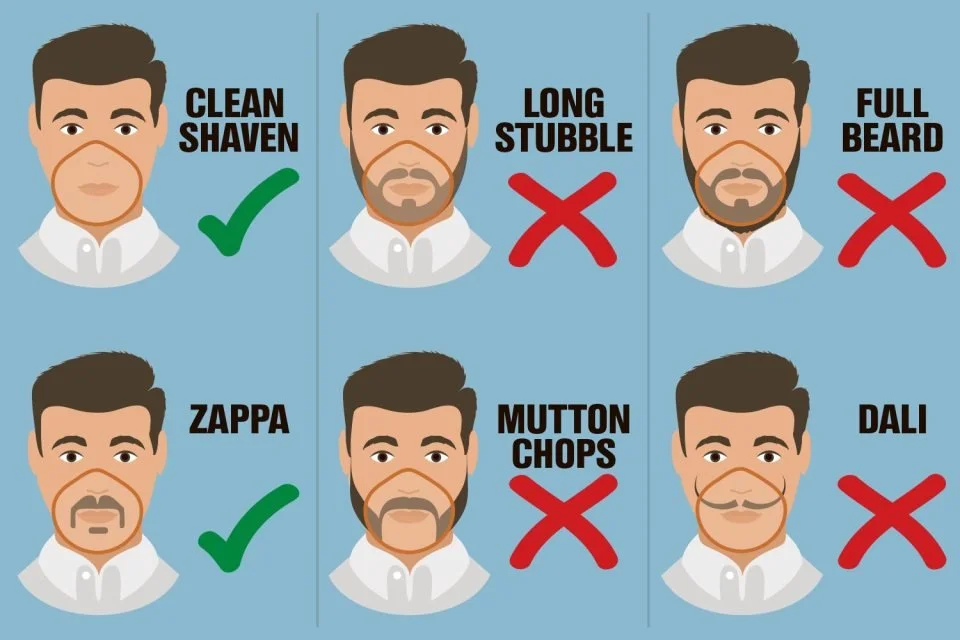
OSHA’s Respiratory Protection Standard is clear: 29 CFR 1910.134(g)(1)(i)(A) prohibits tight-fitting facepieces when facial hair comes between the sealing surface and the face or interferes with valve function. This includes beards, stubble, sideburns, and mustaches that cross the seal line.
Non-compliance remains common, increasing health risks for employees and exposing employers to OSHA penalties.
Facial hair along the respirator sealing surface interferes with tight-fitting facepieces and prevents a proper seal. Even small gaps allow contaminants to enter, reducing the level of protection. Because many exposures cause cumulative, long-term health effects, the impact may not be immediately apparent.
OSHA Citations & Penalties
For violations of 29 CFR 1910.134(g)(1)(i)(A), OSHA may issue the following penalties:
Serious violation(most common classification): up to $16,550 per violation
Willful or repeated violation (e.g., knowingly permitting noncompliance or failing to correct prior citations): up to $165,514 per violation
Failure to abate (not correcting cited facial hair violations by the deadline): up to $16,550 per day until corrected
OSHA may cite multiple instances of improper respirator use separately, which can significantly increase total penalties.
Core Compliance Requirements
Maintain a clean, unobstructed seal area: Tight-fitting respirators require a clean seal to work effectively. Hair, stubble, or anything else that interferes with the sealing surface can compromise protection.
Perform a seal check every time: OSHA requires employees to perform a user seal check every time the respirator is donned to confirm an effective seal before entering a hazardous environment.
Complete initial and annual fit testing: Respirator users must undergo initial and annual fit testing to verify the selected respirator model achieves a proper seal under expected working conditions.
Alternatives When Facial Hair Cannot Be Removed
When facial hair cannot be removed, a loose-fitting powered air-purifying respirator (PAPR) with hoods or helmets may be used. These systems do not require a tight facial seal, making them a practical compliant alternative for workers with facial hair when appropriate for the hazard. Costs can vary significantly depending on the system and application. Note: There are no medical or religious exemptions to OSHA’s Respiratory Protection Standard. To accommodate facial hair, employers must provide alternative, loose-fitting PARPs.
Bottom Line
Tight-fitting respirators require a clean seal to provide effective protection. Enforcing daily seal checks and offering appropriate alternatives like PAPRs are critical to compliance, worker protection, and avoiding costly OSHA citations. For additional guidance on OSHA Respiratory Protection compliance, such as Training, Voluntary Use, and other requirements, check out OSHA's eTool (https://www.osha.gov/etools/respiratory-protection) or contact the knowledgeable team at ACS today.